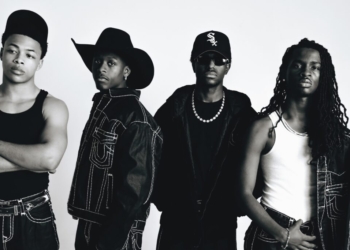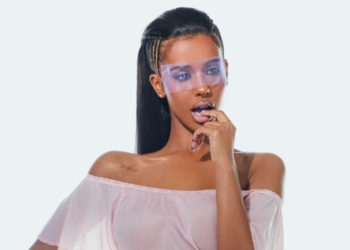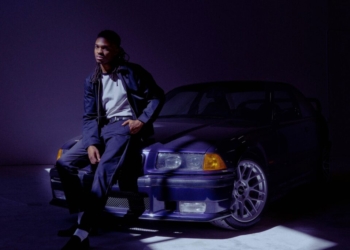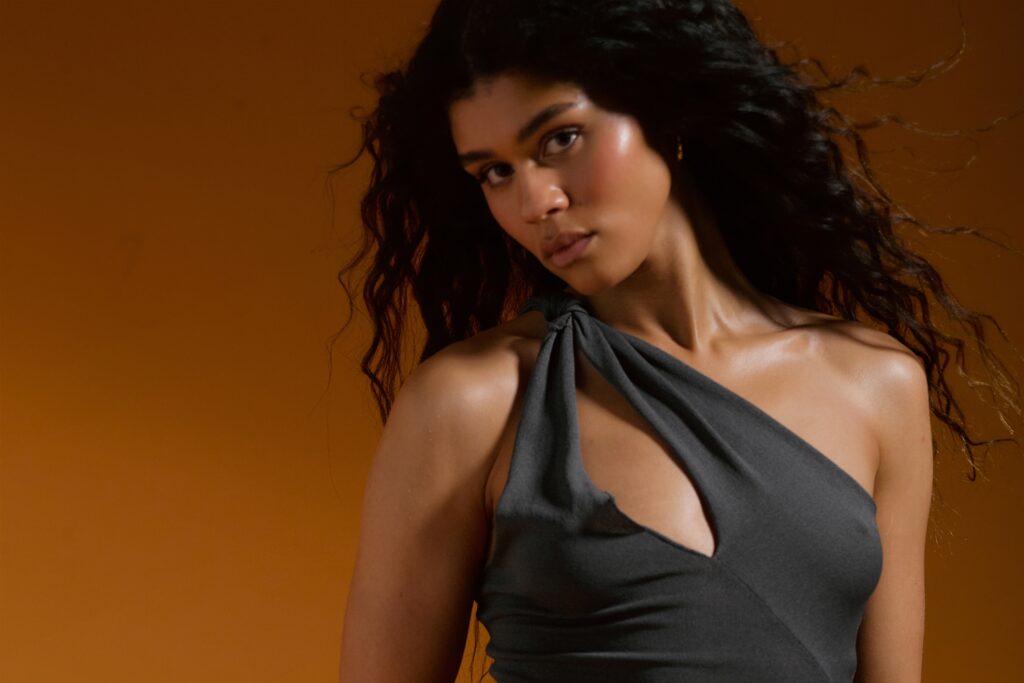
Ama is done hiding behind her art. The London-raised singer, formerly known as Ama Lou, is stepping into a new light with her self-titled sophomore album, out via Brent Faiyaz’s ISO Supremacy.
“I feel like in my career, I’ve done the opposite, whereas most people come out as themselves and then they make characters, rebrand and switch up to further get into different lanes,” Ama tells Rated R&B. “I came out experimenting as this kind of ever-changing artist, where all the videos are different, and I’m putting prosthetics on. Now, I’m simplifying it. It’s like I’ve done everything in reverse. It’s quite funny, actually.”
It took some time away for Ama to gain this sense of renewal. Following the release of her 2023 debut album, I Came Home Late, the singer-songwriter parted ways with her then-label, Interscope Records, and spent more time rediscovering parts of herself. Though she took a break from releasing music, she didn’t stop expressing herself the best way she knows how: through writing.
AMA is the singer, born Ama Louisa John, in pure form. The album’s 13 self-penned tracks carry the same honesty as her past work. But, just like her direct gaze on the album’s cover, the lyrics are intentionally clear — all by design. “I used to hide behind cryptic lyrics and intense production,” she says.
Ahead of joining Ella Mai on her upcoming Do You Still Love Me? Tour, Ama discusses her name change, reflects on the transitional period between labels, shares how she joined Brent Faiyaz’s ISO Supremacy and tells the story behind several songs from the new album.
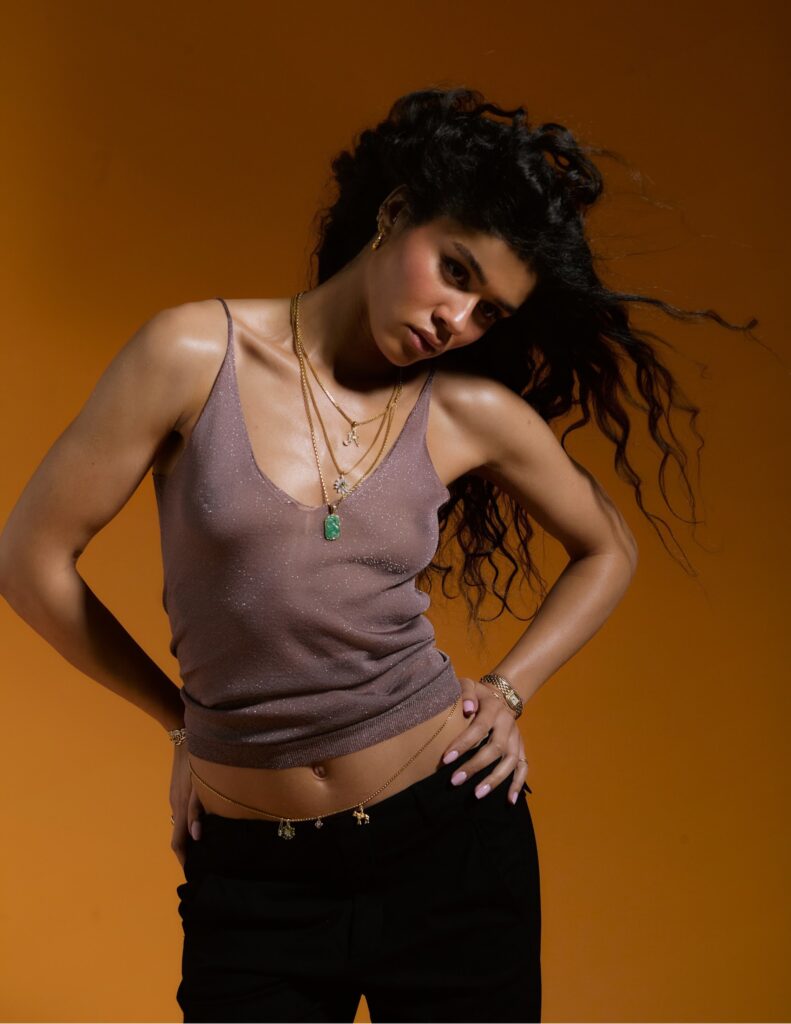
How would you say you’ve personally and artistically evolved from the time you released your DDD EP in 2018 through now?
Before, I used to create as a shield rather than to express myself and to be seen. Now, I have more of my personal life and me as a whole, developed human in my work. I feel like AMA is a complete flip on its head. After my last album, I had a moment and just completely changed as a person. This album is the result of that. Everything’s stripped back now, even in how I’m presenting myself as an artist. There’s still world-building, but I’m showing up as 100% myself. All these songs are written from my exact perspective.
After your previous album, I Came Home Late, you parted ways with your label and dropped ‘Lou’ from your stage name. How would you describe that transition, and was there a turning point that initiated those changes?
Music has always been a salvation for me. I’ve been writing songs since I was 11, and no matter what mood or life event, I could always write. After my last album, I couldn’t write anymore. It was a sobering moment because I realized the art of making music and creating wasn’t fun anymore. So I took a step back. I was no longer signed to my old label, and thought, “I’m just going to go into the studio and create because it’s fun, not for a project.”
Because I allowed myself to be open to that process and didn’t try to force my own hand, the music started coming back — but it was very different. Every time I went to write, if it wasn’t exactly the truth or if I was trying to hide behind any lyric, it wouldn’t land, and I wouldn’t complete the song. That in-between stage was a massive turning point.
The name drop came because I’ve always just been Ama. My name is Ama, and Ama Lou was a name I chose when I was like a preteen. I wanted the person who created this music from this extremely honest place to show up to present it. I didn’t feel like that was Ama Lou anymore. I felt like she had a different type of representation. She serviced and protected me this whole time, and that’s so beautiful. But I feel like I’m just different now.
During that in-between time, did you give yourself space to collect your thoughts through living a bit, or did you immediately hit the studio and find yourself through the sessions?
It was a combination. Stepping back from releasing and being more outside in the world and creating were part of the process. I wouldn’t have been able to even get through anything if I hadn’t done that. My craving from that moment of not being able to write was that I only wanted to write. Writing is part of my entire personality, my whole being and sole purpose in this art.
How did you land at Brent Faiyaz’s ISO Supremacy label?
I love Brent. He’s the homie. I went to his first show in 2017, but we became friends in 2019. We had some producers in common from Sonder, and we had seen each other sporadically throughout the years. One day in 2024, he FaceTimed me, and he’s like, “Yo, I heard you’re not signed. I can’t believe you’re not signed. I have a label. If you give me a chance, let me show you. I’m the best CEO because I understand, because I’m an artist. I love everything you do, and I can’t even believe that this opportunity is even here. Come to Miami, let me show you the vibes and then let me meet the team.” We kind of just proceeded like that.
Brent is someone I’ve always listened to. He’s an artist I love and admire musically. I feel like our visions when we were having deeper conversations about this partnership were aligned. I felt he was super supportive, involved and enthusiastic about what I did. I felt very seen and understood by him without having to explain myself. So it just seemed very natural. It’s been a great partnership. There’s a lot of respect between us and a lot of space and support to do what I need to do. Even with directing and stuff, all of that was highly encouraged, whereas I’ve been signed to places before where it was more of an inconvenience for me to have my hands in most things.
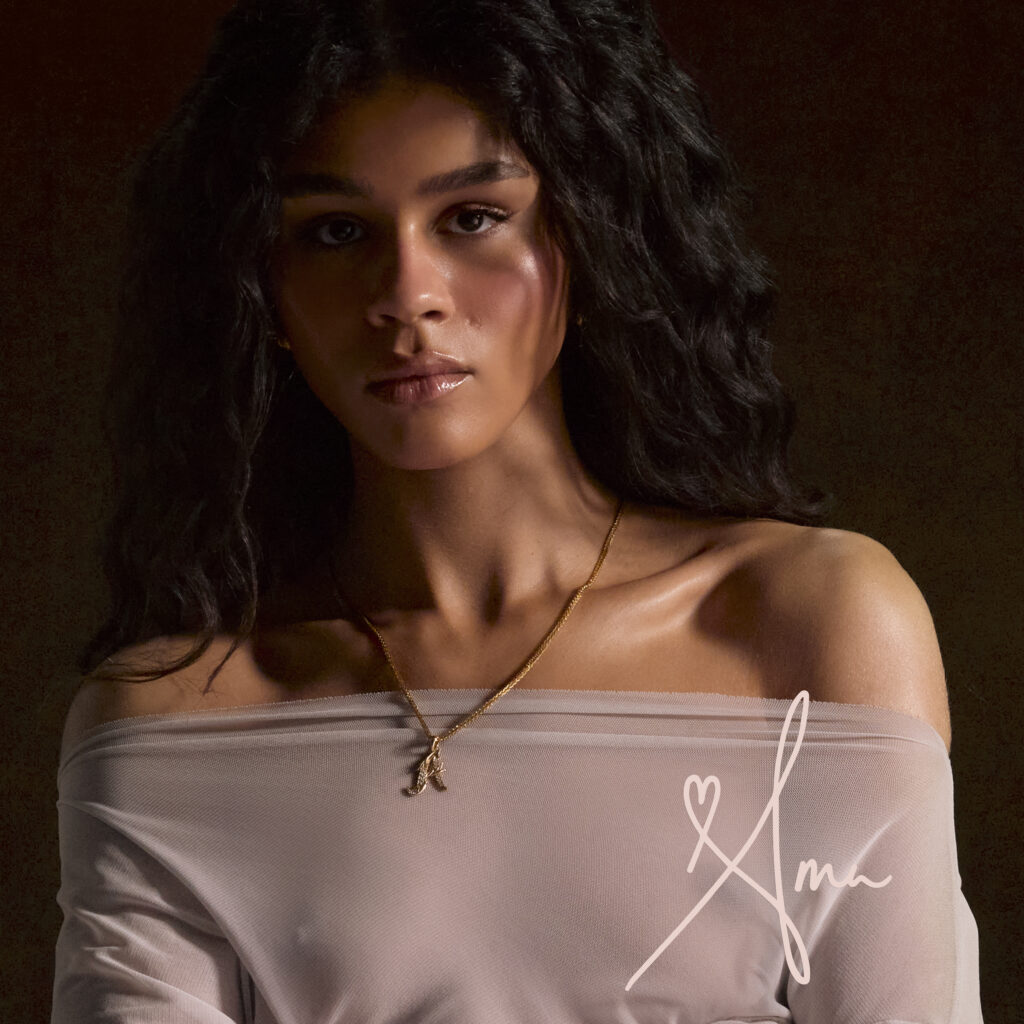
What does your self-titled album represent for you?
It’s the first time I’m 100% showing up as myself, and you’re getting my inner thoughts. There’s no fluff. There’s nothing to hide behind. I ran all of my lyrics through my friends and engineers to be like, “Hey, on first listen, does this make sense to you?” If it was a no, I’d go back and change it. I wanted it to be easily digestible and accessible — not dumbed down, just easy listening. It had another title before, which we changed because there’s nothing that can represent this better than just being you.
You collaborated with Brent Faiyaz on “Need It Bad.” What’s the story behind creating that record?
Throughout the years, if Brent’s in LA or Miami, we would always be in each other’s studio sessions. He was creating his album at the same time and was like, “Yo, Ama, listen to this. I think you should be on this.” We went to the studio that day and I wrote my part and recorded it. He stayed the whole time. There were tweaks afterward, but it was done in a very old school R&B way, where you’re in the studio together and write. It was very collaborative.
What mindset were you in when you were writing “Aura,” and how did Bryson Tiller land on it?
That was one of the early ones I wrote. I was trying to get my shit back. I was on my gangster shit. When I’m not feeling so great, I turn to writing. If I’m not feeling so confident, I’ll turn to music and pick a really hard beat, and I’ll try to channel conversations about confidence I’ve had with other people or times when I felt my best. Whatever the lyrics are, they come out and materialize.
It’s funny because I sent Bryson a different song from the album, and he was like, “Yeah, that’s amazing.” I was asking when he’d been in LA again [because] he never leaves Miami. So one day, I texted him on the plane and was like, “If I’m in Miami today, are you free?” He’s like, “Yeah, just come to the crib.” So I flew down there, and I started playing him some of the other songs. He heard “Aura” and was like, “Whoa, what’s this song? Could you send me this? I know it’s a complete song already, but I feel connected to this.” I sent it to him. He laid down his shit and sent it back. I love Bryson. He’s a very supportive artist and likes to see people win.
On “Friend Zone,” you don’t mince your words when you’re setting boundaries. Where did you pull from?
That song is about a specific situation that me and my girls have spoken about before. And it’s funny, when I play that song for people, usually men, they either hate it, and I’m like, “Wait, are you that kind of man?” Or they’re like it’s their favorite song on the album. I’m a very direct person. I’ve had situations in the past where people enter your life on false pretenses, when you know the reality of the situation. You’re trying to act like you’re my friend, but really, you want something more. But babes, that was never the vibes between us. Now you’re overstepping boundaries. You’re trying to ruin my vibes. I’m like, “Oh, hell no, we’re not going to do that.”
“So…” takes accountability for shortcomings in a relationship. Why was this an important song for you to include on the album?
“So…” is a song I wrote for a male artist. He didn’t end up using it, so I asked for it back. I loved that song. I was like, “Damn, this is still written from a male perspective.” But I was thinking, instead of trying to change it, I wanted to keep it authentically as it was, because the place I wrote it from as a songwriter was based on conversations I had with him and my other male friends. “So…” represents the inner thoughts of men when they’re posturing, but they’ve fumbled things they truly cared about and mistakes they’ve made. I wanted to keep it as that because it was an interesting perspective.
You poured your heart all over the album, but which song do you feel was the most vulnerable for you?
When I wrote “Ride or Die,” it felt very exposing to admit how much I care about things. Obviously, in conversation, I will tell you, everyone knows that I’m super incessant and how much I care about everything — people and all my work. I talk about therapy in that song and just that feeling of isolation and loneliness when you’re like, “Damn, does anyone out there care as much as I do? Does anyone pay as much attention as I do? Will I ever be met on that scale?” It’s really beautiful to see how that song connects with different people. It’s definitely one of the most vulnerable songs, but it also slaps.
What do you want listeners to take away from AMA?
I feel like my last album, I had something to prove sonically and wanted to show people the breadth of what I could do. With this one, everything is simplified because I feel like I’ve shown the breadth of what I could do, but I never connected myself to it. Here I’m showing you myself just to be seen and to be known a little bit better. That’s all I can hope for from this project.
Featured Photo Image Credit: Rashidi Noah
Stream AMA here.