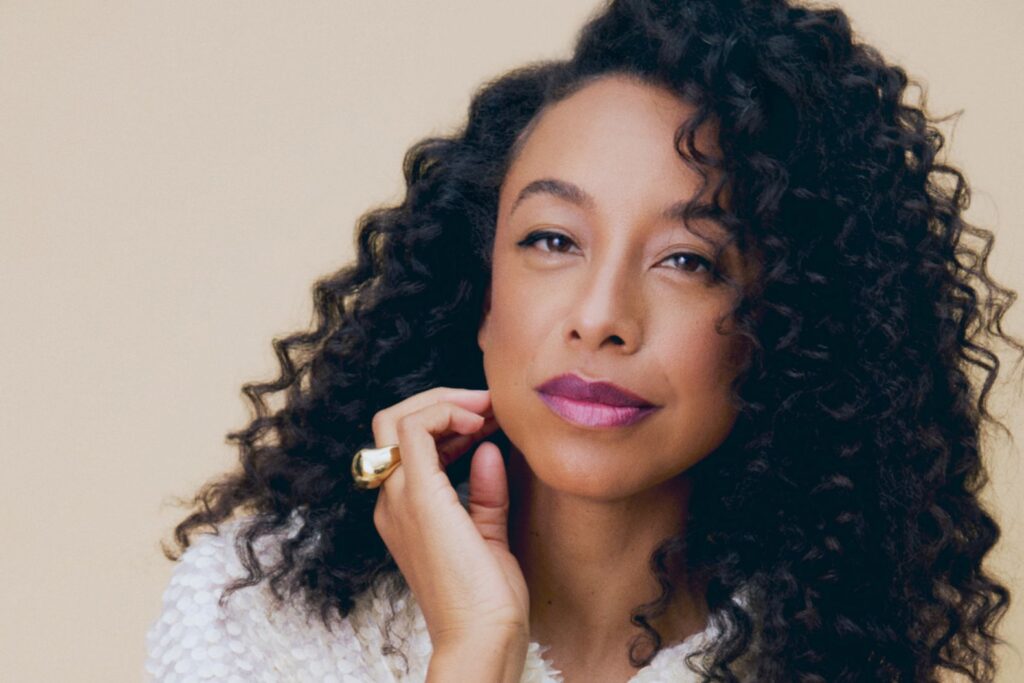
“I’ve made this record. Will anyone hear it? Will anyone like it?” Corinne Bailey Rae asked herself after completing her debut album two decades ago. It’s safe to say the answer to both questions was yes.
After releasing her self-titled LP, the British singer achieved international success, hitting No. 1 on the U.K. charts, No. 4 on the Billboard 200, and landing multiple Grammy nominations, including Best New Artist. The critically acclaimed album is home to the acoustic soul gem “Like a Star” and the immortal “Put Your Records On.”
Fresh off the 20th anniversary of her debut, the singer transports back to 2006 to conjure an instant memory from that era. Her lips curve upward as she recalls her humble beginnings. “I think of myself and what it was like writing those songs and recording them in all these various studios in London,” Bailey Rae says over Zoom. “I was working with different producers. There was so much hope in it for me. These songs have been with me on my journey through all these 20 years; I’ve played them in rooms all over the world.”
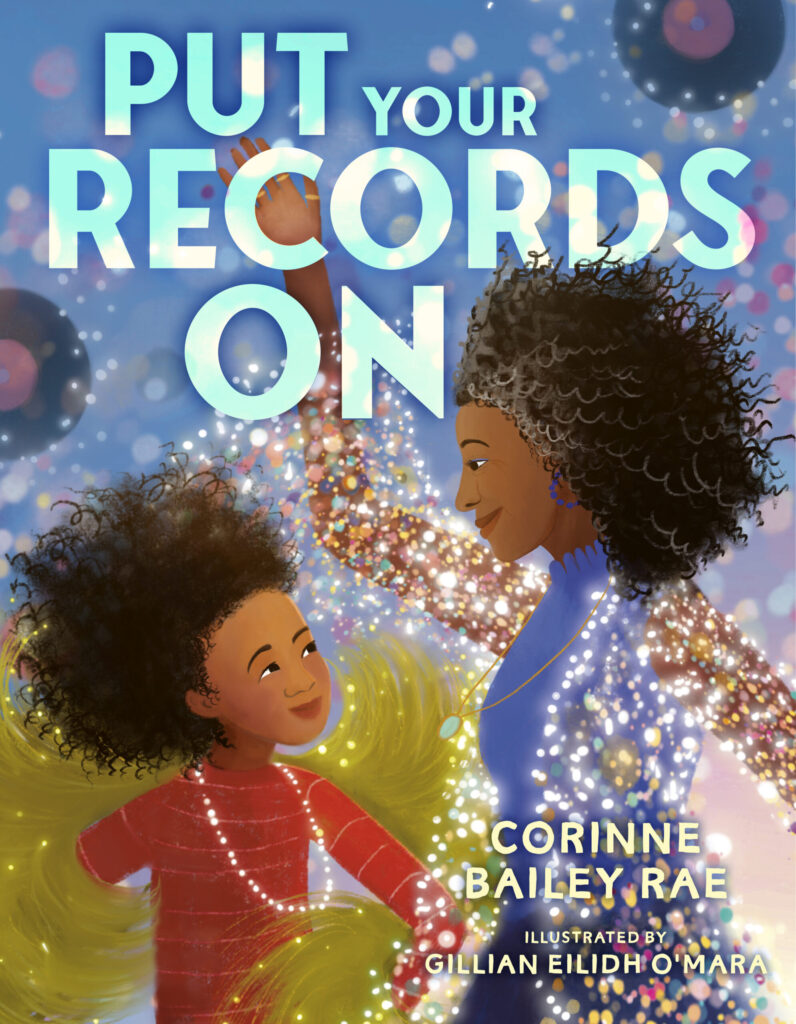
Over the years, “Put Your Records On” has taken a life of its own. The uplifting anthem, which has over 1 billion Spotify streams, went viral after indie pop singer Ritt Momney released a cover of it in 2020. Beyond music, the feel-good track is also the inspiration for Bailey Rae’s new children’s book, Put Your Records On, available now via Rocky Pond Books, an imprint of Penguin Young Readers.
Illustrated by Gillian Eilidh O’Mara, it tells the story of a young girl, Bea, whose great-aunt Portia unveils her cherished record collection tucked away in her attic. After being introduced by a range of favorites, Bea is empowered to learn more about herself through music.
You recently announced your 20th anniversary tour, where you’ll perform your debut album in its entirety. How does it feel to hit this milestone?
It feels amazing. I think of my young self and all this hope in the record. I had already been in a band when I was a teenager, and nothing had really happened with that, so I didn’t take any of it for granted. You step out and hope people will be into it. I never knew I’d get to go out of the country with it. We started having all these calls, like, “Oh, France wants you, Spain, Italy, U.S.” These songs [have] been with me on my journey through all these 20 years; I’ve played them in rooms all over the world. I feel thrilled that there is this moment where I get to celebrate it. And of course, with the tour, being able to play all the records on the album and get into it with a band.
Do you remember the feeling you had when you were writing “Put Your Records On”?
I remember coming up with a guitar riff, sitting in my bed in my small rented apartment. The way I play guitar is I’m self-taught, so I don’t really know what anything’s called. I write down the strings and make a little chart. I took it in with Steve Chrisanthou and John Beck. I remember the process of going back and forth, people suggesting things. John had written some songs I had known growing up, so I really admired him as a songwriter. I felt like I was in safe hands with experienced people.
When I left [the studio], there were some gaps in the lyrics. I knew I had to really bring it because I was with two of the songwriters, and I felt like if I didn’t fill these gaps, they would come with suggestions and it would be hard for me to bat them away. I remember being on the plane, being like, “I got to finish it,” and coming up with: “Girl, put your records on / Tell me your favorite song.” I really wanted to have a thing about hair. I had memories of growing in confidence to wear my hair out. That was a journey I was still on when I wrote that song. I felt like I was making it true for myself. It’s an important anthem to me as well.
At what point did you realize you wanted to reimagine “Put Your Records On” into a children’s book?
When I had young children, we were reading a lot of stories. I was telling a lot of stories. So I started this story about Bea and Portia. I liked the idea of capturing it in a book and having a moment where a young girl would discover her elder’s record collection and learn so much about them, that they have this vast musical knowledge inside them. You’re getting to know them in these different ways and meeting these new artists.
Then there’s that realization that there’s a song for every feeling you’ve ever felt. That was such an important thing for me growing up — getting into my dad’s record collection. That’s what “Put Your Records On,” the song, is about: I would put those records on that were his. I had gone through and found my own favorites. I could play my favorite song, which would help lift my mood or hold me in whatever feeling I was having. I wanted to put that in the book, the fact that music can be a place for you to hold your emotions.
One thing I like about the book is how it champions the tangible side of music. There’s that specific magic in holding a record and feeling or memory hit. In an era dominated by algorithms, why was it important for you to highlight the physical connection of discovery?
I think that music does that. It brings people together across different communities and generations. When you pick up something you bought, you can physically remember where you were. You had to go to the store for it. You can remember how old you were, you can remember when you first heard it on the radio. There’s so much in the music that you’re bringing so much of your own story to it. I think that’s special when you can share a song like that with a child.
The tangible is really important, the patience that it takes to get the record out and put it on the record player and put the needle on. The real-life nature of it is so great, and it helps you to value it in a different way than just scrolling through your phone. It helps them to realize this is music. It was really made by people. You get a sense of the era in a way that you don’t when you’re just scrolling. The hairstyles are different, the clothes are different. You stepping into a whole world when you get to really live with the artwork.
You’ve mentioned that with this book, you wanted to tell children that music is a friend that can sit with you in any room, no matter how you’re feeling. Is there also an intention to help rediscover music from the past or spark conversation?
Definitely. I thought if you’ve got four songs you want to share with young people, you definitely want young people to know about Aretha Franklin — who she is and that she has this joyous voice. It’s like it’s bursting; it’s electric, but also kind of hymnal. It’s powerful, but it’s light and playful — it’s all the things she can do with a voice.
I wanted to share that Harry Belafonte’s song “Jump In the Line” which became a favorite in our family. I liked the idea of having an instrumental piece with Henry Mancini, that there’s this classical jazz world where melodies can play such a part. Ultimately, I would love kids to feel, “I’m a musician. I want to learn the trumpet. I can sing. I want to make my own songs.” Music is something you can really engage with and do and bring that part of yourself out.
The book feels like a gateway for kids to sort of fall down a musical rabbit hole. It reminds me of a children’s version of your last album, Black Rainbows, which is rooted in history. It also makes a cameo in this book.
The illustrator snuck that in there. When I got the physical copy, I was really happy to see that. I love learning things, and like you say, a rabbit hole or a thing where you pull the thread and you find the family tree of an artist. I think, especially with Black music, it’s important to find the heritage to go back to the authors of the music. I was hearing a Prince song the other day, and it was obviously an influence on this Radiohead song called “High and Dry.” I thought, “I don’t know if anybody has put these two together that this Prince song is an influence on this Radiohead song.” The more musical knowledge we have, the more we’d be able to give a nod to all those great forebears. I always love when you can give them their credit.
Get Corinne Bailey Rae’s new book Put Your Records On HERE. See her upcoming tour dates.